
We are honored to welcome six distinguished professors leading the plenary sessions. Their expertise and research will inspire insightful discussions and advance knowledge in scientific and pedagogical mechanics and energy. Below, you will find their biographies and session details.
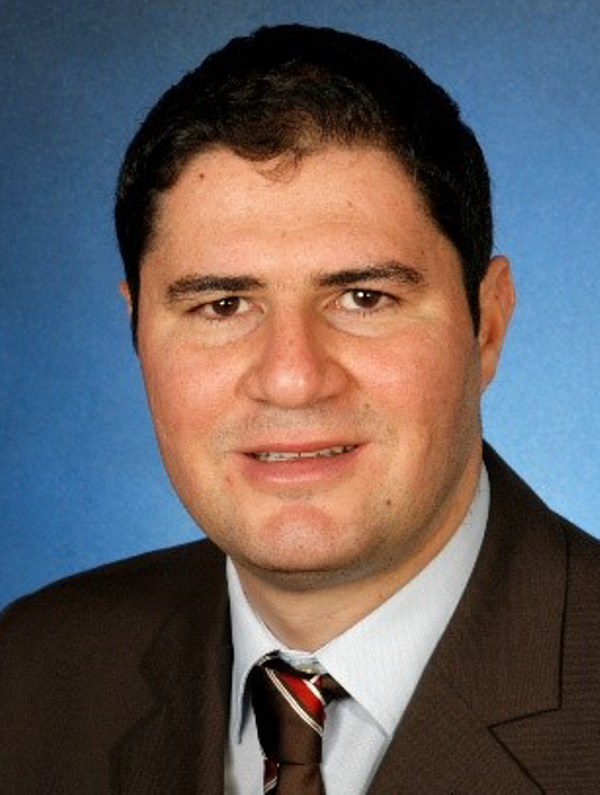
Professor Anas Bouguecha
Biography
Professor Anas Bouguecha is a distinguished academic specializing in mechanical engineering. He is affiliated with the Ecole Nationale d’Ingénieurs de Gafsa (ENIGA), where he leads the Mechanical Modeling, Energy and Materials Laboratory. Professor Bouguecha earned his Ph.D. in Mechanical Engineering and has achieved habilitation (Dr.-Ing. habil.), reflecting his advanced research qualifications. His expertise encompasses finite element analysis, metal forming, biomedical engineering, materials engineering and computer engineering. Throughout his career, he has supervised numerous Ph.D. theses in both chemical and mechanical engineering, contributing significantly to the academic community. Professor Bouguecha has also collaborated on various international research projects, enhancing the global understanding of mechanical systems and materials science. In addition to his role at ENIGA, he has been associated with Leibniz Universität Hannover, further extending his academic influence. His prolific research output includes publications on topics such as formability of steel sheet sheared edges and reprocessing of aluminum chips by hot backward extrusion, underscoring his commitment to advancing mechanical engineering and materials science.
Plenary Session
The Biomechanics of the Bone Remodeling after Hip Arthroplasty
Professor Imed Miraoui
Biography
Imed Miraoui is a Professor at the University of Gafsa, Tunisia and a member of the TEIM Laboratory (Technology, Energy and Innovative Materials). He received his B.Sc. degree in Mechanical Engineering from the University of Monastir in 1994 and his M.Sc. degree in Applied Mechanics from the University of Tunis El Manar in 1996. In 2008, he earned his Ph.D. in Mechanical Engineering from ENIT – University of Tunis El Manar, in collaboration with the School of Engineering at Virginia Commonwealth University, USA. In 2006, he joined the Higher Institute of Applied Sciences and Technology at the University of Gafsa, Tunisia, as an Assistant Professor. From 2011 to 2018, he was with the College of Engineering at Jouf University, Saudi Arabia, where he also served as Head of the Mechanical Engineering Department for four years. He is currently an Associate Professor and the Dean of the College of Applied Sciences and Technology at the University of Gafsa. His main research interests include the mechanics of materials, energy and laser machining. He is a certified Project Management Professional (PMP) and an ISO 21001 Lead Auditor. Miraoui serves as the project manager of PAQ-DGSE, a quality support program in higher education funded by the World Bank and the Ministry of Higher Education. He has participated in several national and international research projects as both a coordinator and a partner.
Plenary Session
Title: Bio-composite materials gypsum-based reinforced with natural fibers and/or cords
Abstract: Sustainable development has become a major issue in the construction and materials industries. The exploration for greener and eco-friendlier building materials is a major challenge for engineers and scientists. Bio-composite materials gypsum-based reinforced with natural fibers have interesting characteristics such as high flexural strength, high impact resistance, low thermal conductivity, and low density. These properties make them attractive construction materials for many applications. They are an interesting alternative to traditional materials such as concrete and steel. These materials also offer weight reduction and energy savings benefits. Weight reduction reduces transportation costs and makes the materials easier to handle and install. In addition, their low thermal conductivity reduces the energy required to heat and cool buildings. The presentation will discuss the mechanical, thermal, and physical properties of these materials and their potential applications in different fields. The research conducted in this work underscores the compelling benefits of incorporating alkali-treated natural fibers into composite manufacturing. Focusing specifically on cactus fibers and sisal cellulose fibers, our study utilized a comprehensive suite of analytical techniques to elucidate the effectiveness of the sodium hydroxide treatment process in eliminating impurities and improving the mechanical and physical properties of these composites. Tensile tests provided quantitative data showing the significantly increased tensile strength of the fibers after treatment, indicating their improved quality. In addition, the three-point flexure tests demonstrated the significant increase in flexural strength of the gypsum-based composites due to the improved matrix-fiber adhesion facilitated by the optimization of the treatment conditions. Taken together, these results confirm the promise of alkaline-treated cactus fibers and sisal cellulose fibers in the development of more sustainable and high-performance materials. They emphasize the critical role of tailored treatment conditions and fiber properties in realizing the full potential of natural fibers in composites technology, ultimately contributing to the creation of environmentally friendly and advanced materials with versatile applications.
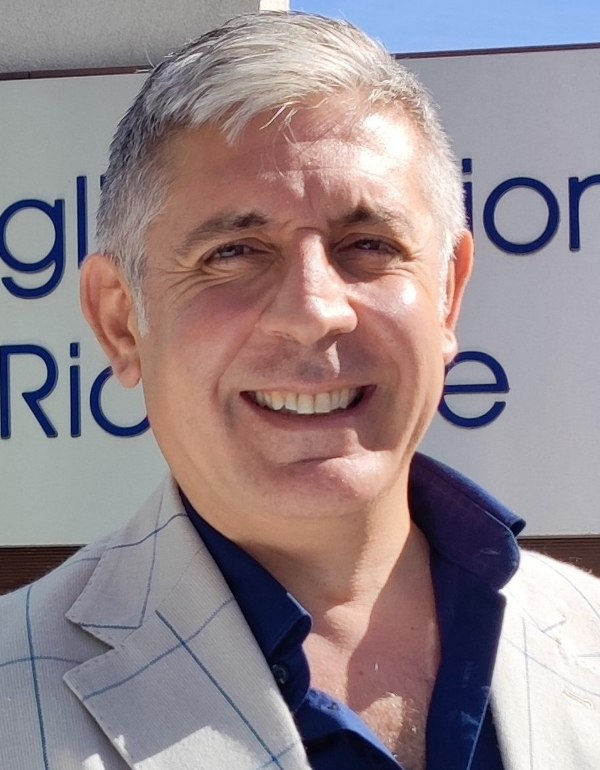
Professor Massimiliano Lo Faro
Biography
Dr. Massimiliano Lo Faro is a Senior Researcher at the Institute for Advanced Energy Technologies “Nicola Giordano” (CNR-ITAE), which is part of the Italian National Research Council (CNR). He earned his Ph.D. in Materials for Environment and Energy from the University of Rome “Tor Vergata” in 2008, focusing on ceramic materials for direct hydrocarbon oxidation in solid oxide fuel cells (SOFCs). Since joining CNR-ITAE in 2008, he has led research activities on SOFCs, contributing to over 100 publications. His expertise spans solid oxide electrochemical devices, including fuel cells, electrolysis cells and batteries. He has edited textbooks such as Solid Oxide-Based Electrochemical Devices and Hybrid Technologies for Power Generation and his contributions have been recognized with awards like the H2Roma award and multiple Dokiya Fund grants. Dr. Lo Faro has also served as a guest editor for journals like the International Journal of Hydrogen Energy and Electrochimica Acta.
Plenary Session
Power energy and green hydrogen production using ceramic electrochemical technology: Issues, challenges and developments at CNR-ITAE
Professor Mohamed Jomaa Safi
Biography
Professor Mohamed Jomaa Safi, currently Professor Emeritus, has had a distinguished career in physics, mathematics and energy research. He holds a State Ph.D. in Mathematics (1987) and a Ph.D. in Physics (1980) from the University Pierre et Marie Curie (Paris 6), along with a B.S. in Theoretical Physics from the University Diderot (Paris 7). He has served as Vice-President of the Tunisian Society of Physics, a Visiting Fulbright Professor at the University of Texas and M.I.T. and a Visiting Professor at the University of Ancona (Italy). He was appointed Full Professor of Heat Transfer and Energetics at the National Engineering School of Tunis (ENIT) and directed key research units, including “Mechanics and Energetics” at ENIT and “Metrology in Thermal Science and Fluid Mechanics” at the National Engineering School of Monastir. His contributions extend beyond academia, having served as Advisor to the State Secretary for Research in Energy, Water and Environment and as Coordinator of the Arab Network on Desalination Technologies and Renewable Energy Sources under the Arab Science and Technology Foundation (ASTF). He co-founded major scientific conferences, including the Euro-Med Conference on Desalination, the International Conference on Applications of Porous Media and the Maghreb Conference on Water, Energy and Climate Change. His achievements have been recognized with awards from the Arab Science and Technology Foundation (2008), the Sustainable Development Institute of the College of Menominee, Wisconsin, USA (2005) and the Italian Government, which honored him as Knight of the Order (Cavaliere dell’Ordine) in 2005.
Plenary Session
Title: Thermal Storage: the case of Solar Pond
Abstract: Nowadays, all the countries around the world are facing a shortage in renewable energies wich are becoming source of wars. Renewable energies represent the most relevant solution. However, these energies, due to their spatial and temporal variations, require daily or seasonal storage. Different solutions are available. For a given source (solar, wind, geothermal, or others) the final application determines the type of storage, the storage process, and the storage medium.
In this paper, we focus on solar energy as source, gradient solar ponds as a storage medium, and sensible heat storage in salt water as a processus.
Experimental results will be discussed, and some industrial applications will be presented.
Keywords: Renewable Energies; Thermal Storage; Solar Ponds; Industrial Applications
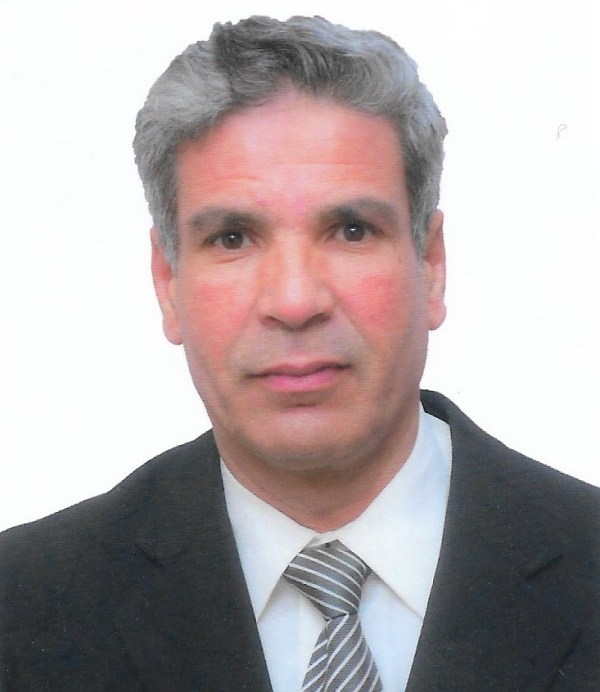
Professor Mouldi Chrigui
Biography
Professor Mouldi Chrigui is a faculty member at the Ecole Nationale d’Ingénieurs de Gabès (ENIG), where he leads the Mechanical Modeling, Energy and Materials Laboratory. Previously, he was a research associate at Darmstadt University of Technology and has supervised numerous PhD theses in chemical and mechanical engineering. A recipient of Tunisia’s national scholarship, he completed his engineering (Dipl.-Ing.) and master’s degrees at the Karlsruhe Institute of Technology (KIT) before earning a PhD in Mechanical Engineering from Darmstadt University of Technology. He also spent one year at Heidelberg University and undertook an extended scientific stay at South Wales University in Sydney, Australia. With extensive experience in academia and industry, Professor Chrigui has made significant contributions to Computational Fluid Dynamics (CFD), combustion modeling and multiphase flow simulations. As a certified international expert in combustion modeling, he has played a key role in cutting-edge industrial projects and has contributed to the advancement of simulation methodologies.
Plenary Session
Computational Fluid Dynamics (CFD) in Energy Systems: Innovations, Challenges, and Future Applications
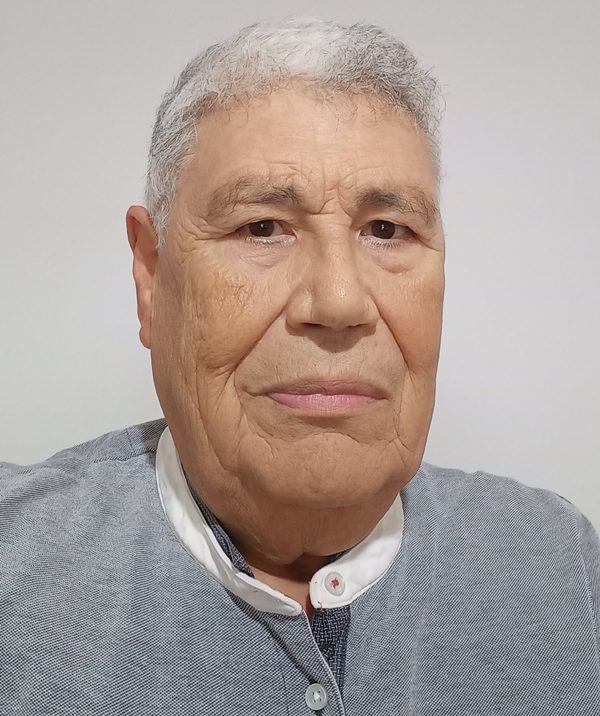
Professor Ahmed Bellagi
Biography
Dr. Ahmed Bellagi is emeritus professor of chemical and energy engineering at the Ecole Nationale d’Ingénieurs de Monastir since 1992. Prior to that, he has been a professor of chemical engineering at the Ecole Nationale d’Ingénieurs de Gabès. He received his PhD in 1979 from the Rheinisch‐Westfälische Technische Hochschule at Aachen, Germany. His research interests mainly focus on Process Thermodynamics, Absorption Refrigeration and Solar Cooling, Modeling and Simulation of Unit Operations and Processes.
Recently, his pedagogical interests focus on the development of Demonstrations for chemical and energy engineers using the software Mathematica® in collaboration with Dr. H. Binous.
http://demonstrations.wolfram.com/author.html?author=Bellagi
Plenary Session
Calculation of complex chemical reaction equilibria: old and new approaches